
Publications
Interactive companion
The book Máquinas y Equipos Térmicos, made to be touched: live diagrams, calculations that respond and animations that show you why.
How do I access the companion?
- Units 1 and 2 are open access: try them without signing up.
- The remaining units are unlocked with the code in your copy of the book (print or Kindle). You enter it once and the units are linked to your account.
It does not replace the book: it goes with it. Where the paper explains, the companion lets you experiment — you change a variable and see how the machine responds.
Are you a vocational training centre or a teacher? Get in touch about classroom use and licences.
Alongside professional practice in the private sector, our work also extends to teaching and science communication, sharing a wide range of technical documentation with other professionals and companies in the sector.
In 2013 a series of materials was developed, aimed mainly at training in areas related to teaching and professional practice, and a first volume was published as a support document for students and teachers in different settings: both formal education (secondary schools and vocational training centres) and state-subsidised or private centres, especially courses leading to the recognition of units of competence through the accreditation of professional experience. These materials also support the training of technicians working in private companies.

Máquinas y Equipos Térmicos I
Thermal equipment technicians often have to rely on their own experience, or that of others, when they lack exact information to solve a problem. Over time, they develop rules of thumb based on observation and day-to-day work that help them diagnose faults effectively. This empirical knowledge, although not always infallible, is very useful in their daily work. The first aim of this material is to provide a theoretical foundation and a reference for understanding the phenomena that occur in thermal installations. The second is to serve as a study guide for the Thermal Machines and Equipment modules of the intermediate vocational training courses in air conditioning, refrigeration and heat production.
Buy:Complete Vol. IPrintKindle
View in the companion(in Spanish)
Máquinas y Equipos Térmicos II
In progress
Second volume of the materials, covering Blocks III and IV (units 6 to 10) of the Thermal Machines and Equipment module. It is currently being written; in the meantime, the book's interactive companion brings the concepts to life and works through the examples step by step.
View in the companion(in Spanish)
Identificación de Magnitudes en Instalaciones TérmicasMáquinas y Equipos Térmicos I nº 1
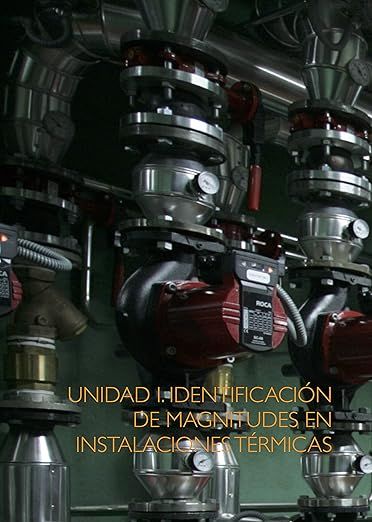
Technicians need to understand the quantities involved in thermodynamic processes, as they allow them to analyse performance and detect possible faults in thermal installations. One of the most important is enthalpy, which is essential to characterise thermal machines, especially those based on the refrigeration cycle. Understanding concepts such as energy or enthalpy can be difficult even for experienced professionals. Moreover, much of today's equipment is manufactured abroad, so a good command of unit conversion factors is essential. This knowledge ensures accuracy and effectiveness in technical work.
View in the companion(in Spanish)

HigrometríaMáquinas y Equipos Térmicos I nº 2
Thermal installations aim to create suitable conditions in an indoor environment, which requires proper treatment of the atmospheric air it contains. To do so, it is essential to understand the composition and behaviour of air, particularly its moisture content, which is the subject of hygrometry. A modern design must take into account not only temperature but also factors such as noise, air diffusion and air quality. The starting point for any installation is an accurate analysis of the hygrometric conditions of the environment. Ultimately, the main purpose of air conditioning is to ensure people's comfort and well-being.
View in the companion(in Spanish)
Cálculo de Cargas TérmicasMáquinas y Equipos Térmicos I nº 3
Every air-conditioning process involves a heat transfer that can be analysed by means of an energy balance. This requires precise knowledge of the thermal load, that is, the energy needed to carry out the process. This calculation is the essential starting point for any installer, since an error can have serious consequences. In complex cases, such as the air conditioning of unusual spaces, the support of a specialised engineer is advisable. Obtaining the correct figure is essential to design efficient and safe thermal installations.
View in the companion(in Spanish)
Generación de CalorMáquinas y Equipos Térmicos I nº 4
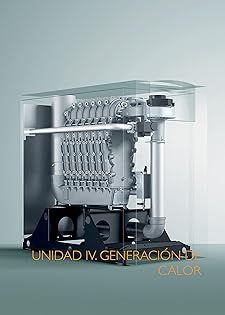
In recent decades, global energy demand has grown, triggering several economic and energy crises that seriously affected the world economy. In Spain the situation is more worrying because of the country's high dependence on energy imports, which led to the Energy Saving and Efficiency Strategy 2004-2012. The use of fossil fuels remains one of the main causes of environmental degradation. In the absence of fully competitive technological alternatives, improving the efficiency of thermal machines is essential. This unit covers both heat generation from fossil fuels and the use of solar energy, with a focus on optimising their performance.
View in the companion(in Spanish)
Elaboración del Ciclo FrigoríficoMáquinas y Equipos Térmicos I nº 5
The closed vapour-compression cycle, represented on the Mollier diagram, is a fundamental tool for thermal systems technicians. It makes it possible to analyse the operation and energy efficiency of the machines that use it. The diagram shows numerous operating and energy parameters. It also helps to predict how the machine will behave in response to possible changes in those parameters. Taken together, it is essential for evaluating and optimising the performance of refrigeration systems.
View in the companion(in Spanish)

Selección de Fluidos Refrigerantes y LubricantesMáquinas y Equipos Térmicos II nº 1
Refrigerants are key agents in thermal systems, as they enable heat transfer. Their technical development is closely linked to the evolution of refrigeration, especially since the 1970s, when their environmental impact was discovered. Some refrigerants containing chlorine or bromine contribute to global warming and to the depletion of the ozone layer, which led to their regulation under the Montreal and Kyoto protocols. In addition, compatibility between the refrigerant and the lubricating oils is essential to ensure the proper operation and efficiency of the system. Finally, Spanish Law 31/1995 on the Prevention of Occupational Risks sets out the measures needed to protect workers' health, including in the field of thermal installations.
View in the companion(in Spanish)